The Founder Shouldn’t Be the Operating System.
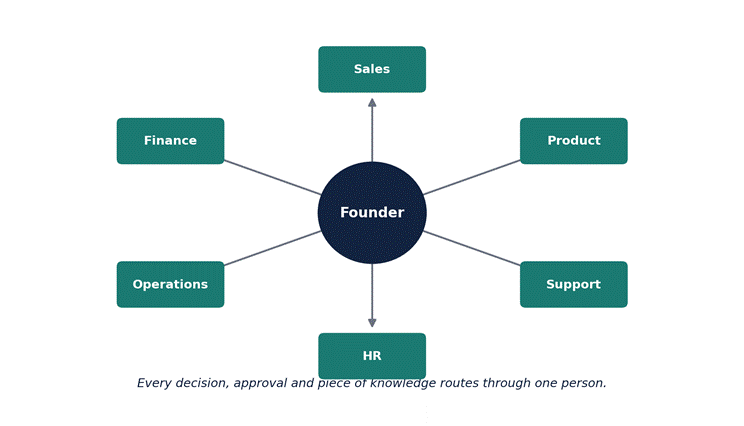
Founder dependency is the condition in which a business cannot make decisions, close sales, resolve problems or move forward without the direct involvement of its founder. It shows up as undocumented knowledge, approvals that stall in one inbox, and client relationships that exist in one person’s head rather than in the business itself. A business built this way can survive. It cannot scale, and it cannot be handed off, sold, or grown beyond what one person can personally hold together.
Most founders don’t build this on purpose. It happens gradually: the founder makes the first hundred decisions because there’s no one else to make them, and the pattern never gets interrupted. Years later, the business has revenue, staff and systems — but every one of those systems still waits on the founder to function.
Signs the Founder Has Become the Bottleneck
Founder dependency rarely announces itself. It shows up in small operational delays that, added together, cap how fast and how far the business can grow.
- Decisions stall until the founder is available, even minor ones
- Staff regularly ask “what would you want me to do here?” instead of acting independently
- Key client or supplier relationships run through the founder personally, not through the business
- Taking a week off requires setting up cover for tasks no one else fully understands
- New hires take months to become productive because critical knowledge isn’t documented anywhere
- Growth plans quietly assume the founder will keep doing more of everything
A business that cannot function without its founder isn’t a business yet. It’s a very demanding job.
Why Delegation Alone Doesn’t Solve It
The instinctive fix is to delegate more. It helps, but it doesn’t solve the underlying problem, because delegation without infrastructure just moves the bottleneck sideways rather than removing it. If a manager is handed responsibility for a process but not the documentation, authority or system to run it independently, every non-routine situation still gets escalated back to the founder.
Real delegation requires three things operating together: the knowledge to do the task (documentation), the authority to decide without asking (accountability), and a consistent way of doing it that doesn’t depend on interpreting the founder’s preferences (standardisation). Without all three, delegation is really just relocation — the bottleneck still exists, it’s just wearing a different job title.
What Founder Dependency Really Costs a Business
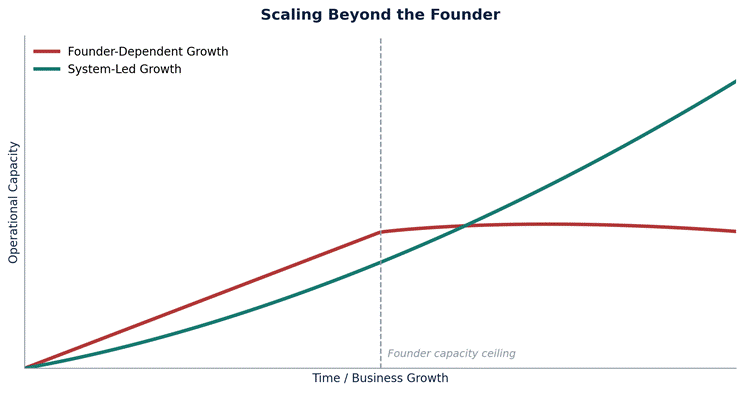
The cost isn’t just the founder’s personal time, though that’s real. Founder dependency caps enterprise value — a business that can’t run without its founder is worth measurably less to an acquirer or investor, because the risk of the founder leaving is a risk to the entire operation. It also slows growth directly: revenue, headcount and market reach can only expand as fast as the founder’s personal bandwidth allows, which is a hard ceiling no amount of ambition removes.
Introducing The Founder Dependency Index™
To help founders see this clearly rather than anecdotally, we built The Founder Dependency Index™ — a scoring model across four pillars that most commonly keep a business tethered to its founder.
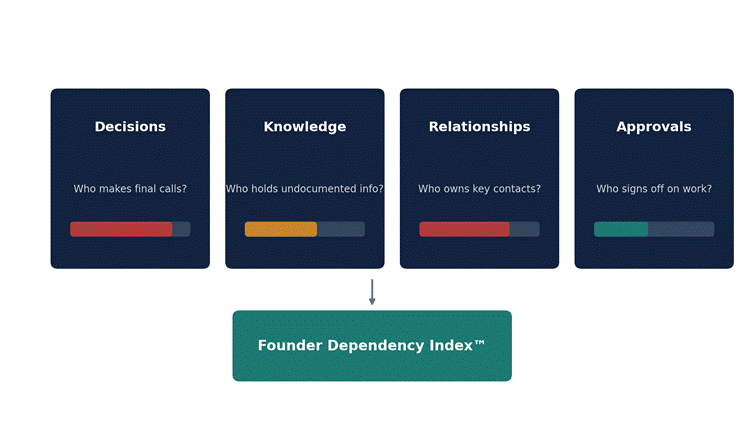
Each pillar is scored on how much the business currently relies on the founder specifically, rather than on a role, system or documented process:
- Decisions — What proportion of meaningful decisions require the founder’s direct input, even when someone else has the relevant context?
- Knowledge — How much operational knowledge exists only in the founder’s head, with no written process, playbook or record?
- Relationships — How many key client, supplier or partner relationships would be disrupted if the founder stepped away for a month?
- Approvals — How many workflows require the founder’s sign-off by habit, rather than by genuine necessity?
A business scoring high across all four pillars isn’t failing — it’s simply early in its evolution from founder-led to system-led. The Index isn’t a judgement. It’s a starting map for where to build infrastructure first.
Founder-Led vs System-Led: What Actually Changes
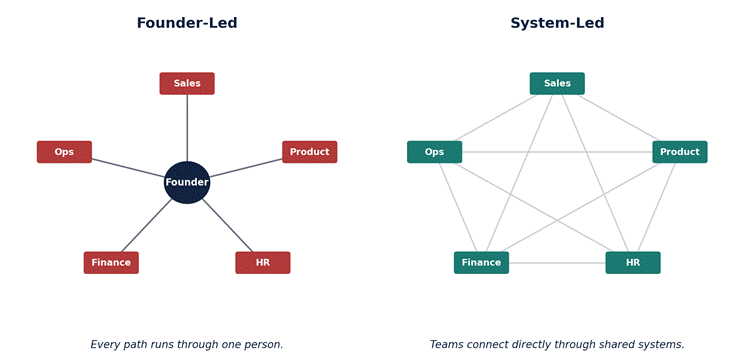
| Founder-Led | System-Led | |
| Decision speed | Fast for the founder, slow for everyone else waiting on them | Consistent, made at the right level without a bottleneck |
| Knowledge | Held in one person’s head, rarely documented | Documented, accessible, and owned by the team |
| Growth ceiling | Capped by the founder’s personal capacity | Scales independently of any one individual |
| Risk if founder is unavailable | Business slows or stalls | Business continues to operate |
| Team accountability | Diffuse — decisions can always be escalated upward | Clear — each system has a named owner |
| Buyer/investor confidence | Lower — business value is tied to one person | Higher — business value is tied to the operation itself |
Documenting Knowledge: The First Real Step
Most founder dependency starts with undocumented knowledge — not bad intentions. The founder knows why a client always gets a specific discount, how a recurring issue is usually resolved, or which supplier to call when another one falls through. None of it is written down because it never needed to be; the founder was always there to supply the answer.
Documentation doesn’t need to be exhaustive to be useful. Start with the questions staff ask most often, and the decisions that get escalated most frequently — those are the highest-leverage places to write things down first. A simple, living playbook that’s actually used beats an exhaustive manual that sits untouched.
Creating Accountability, Not Just Task Lists
Documentation without ownership just creates a reference nobody’s responsible for keeping current. Every process that’s written down needs a named owner — someone accountable not just for doing the task, but for deciding on the exceptions the founder used to handle personally. Accountability is what lets a decision stop at the right level instead of escalating out of habit.
Standardising Processes That Depend on Memory
If two staff members would handle the same situation differently, the process isn’t standardised — it’s still running on individual judgement, which is exactly the pattern founder dependency depends on. Standardising doesn’t mean removing judgement entirely; it means defining clearly where judgement is appropriate and where a consistent, documented rule should apply instead.
Empowering Teams to Decide Without Escalating
Standardised processes only reduce founder dependency if staff are genuinely trusted to use them without checking first. This is often the hardest step for founders, not because staff aren’t capable, but because the habit of being the final answer is difficult to unlearn. Empowering a team means being available for genuine exceptions — and deliberately unavailable for everything a documented process already covers.
Technology as Organisational Infrastructure
Systems and software play a specific role here: they make documented processes enforceable rather than optional. A workflow tool that automatically routes approvals removes the need for someone to remember to loop the founder in. A shared knowledge base makes documented answers accessible without a Slack message to the founder. Technology doesn’t replace the work of documenting and delegating — it’s what makes the change stick once the work is done.
Frequently Asked Questions
What is founder dependency?
Founder dependency is a business’s reliance on its founder for decisions, knowledge, relationships or approvals that haven’t been documented, delegated or systematised — meaning the business struggles to function without the founder’s direct, ongoing involvement.
How do you reduce founder dependency without losing quality or control?
Reduce it in stages: document the knowledge and decisions the founder currently holds, assign clear ownership for each process, standardise how recurring situations are handled, and use technology to enforce the new process automatically rather than relying on habit.
Does founder dependency affect how much a business is worth?
Yes. Buyers and investors typically discount the value of a business that can’t operate independently of its founder, since the departure of that one person represents a direct risk to the entire operation.
The Takeaway
A business that only runs because the founder is holding it together isn’t yet a scalable business — it’s a founder with a growing number of dependents. Reducing founder dependency doesn’t mean stepping back from the business. It means deliberately building the documentation, accountability, standardisation and systems that let the business run well whether the founder is in the room or not.
Score your business against the four pillars of the Founder Dependency Index™ honestly. Wherever the score is highest is where to start building the infrastructure that lets you scale beyond yourself.
Build a Business That Can Scale Beyond You

Joshua Fasinu is a Computer Science student and technology enthusiast passionate about using technology to solve real-world problems. At Snazzy Digital Techspace, he contributes to technology, automation, product development, and digital innovation, while also exploring AI, software development, and business process automation.
He is driven by a desire to learn, build, collaborate, and create digital solutions that make work and everyday life better.